How to make up for the CO₂ of your flying: a 5-step plan for pilots
You can't take back a flight's CO₂, but you can burn less, fund rated carbon credits for the rest and keep the proof. Five steps with real numbers, plus a fleet version for flight schools and clubs.

6 min read
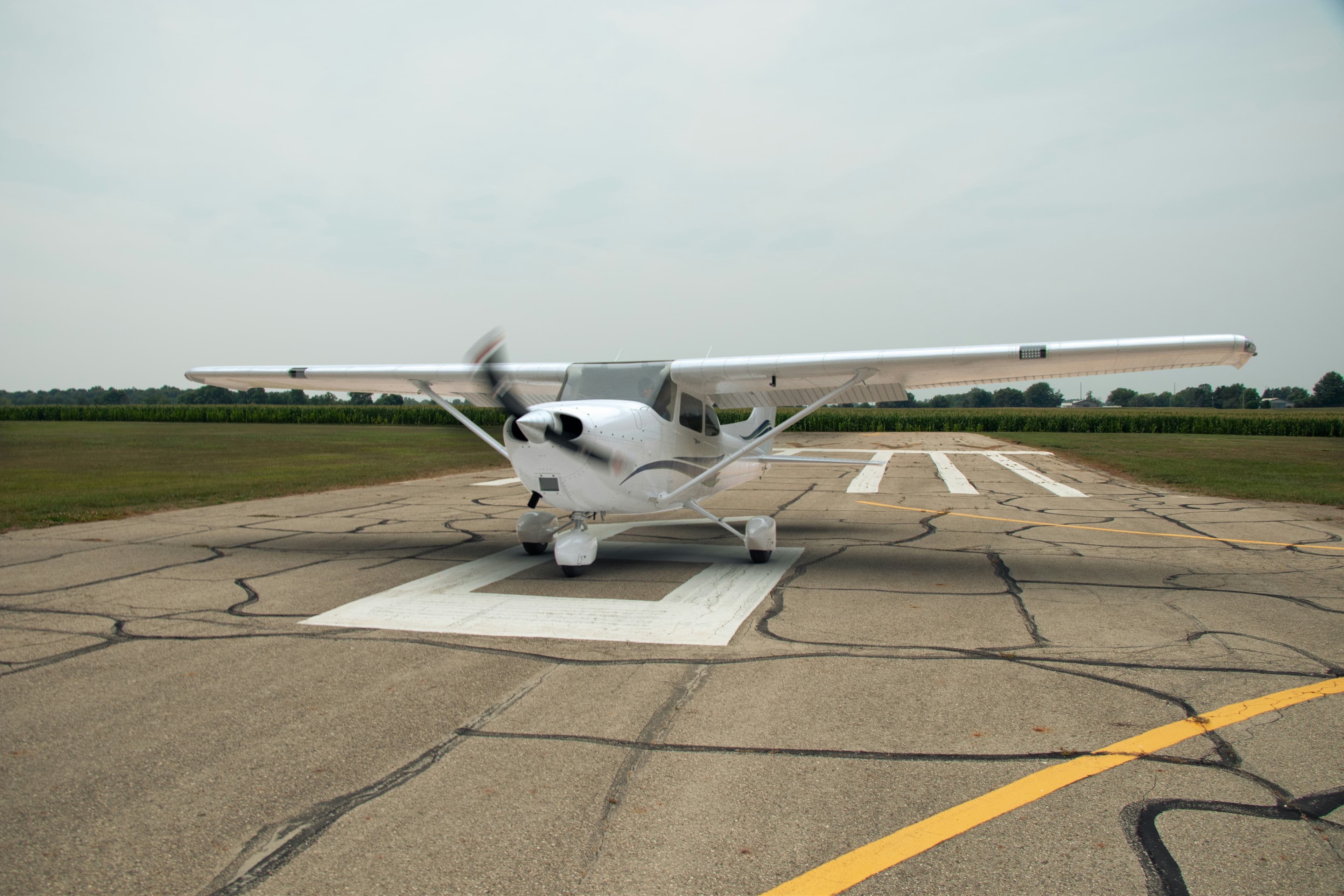
If you've wondered how to make up for the pollution of your flying, start with one number: 88 kg of CO₂, what a Cessna 172 emits in an hour at 75% cruise power (about 10.6 US gallons of 100LL). I'm a private pilot with night and float ratings and 170 hours, mostly in Cessna 172s, and this is the plan I'd give a friend at the club.
The short answer: get your number (8.31 kg of CO₂ per US gallon of avgas), burn less, then fund independently rated carbon credits, retired on a public registry, for what's left. Keep the proof and call it a contribution: offsetting doesn't cancel a flight.
TrimCarbon sells carbon offsets. The steps below work wherever you buy.
What you're buying when you offset
One carbon credit is one tonne of CO₂ that a project avoided or removed. To offset, you have credits equal to your emissions retired on a public registry: canceled for good, so nobody can use them again. Avoidance credits pay to prevent emissions elsewhere; removal credits pay to take CO₂ back out of the air.
Nobody requires a private pilot to offset. Even the EU's carbon market for aviation leaves you out. In the European Commission's words: "Very light aircraft will not be covered." What you do about your tonnes is your call.
Step 1: Get your number
Multiply US gallons by 8.31, the EPA's emission factor for aviation gasoline, to get kg of CO₂ (or litres by 2.20).
Our calculator uses typical cruise fuel flow (about 75% power). Multiply its hourly figure by Hobbs hours, not tach: the tach undercounts at low rpm. A well-leaned hour burns less; your fuel receipts settle it, and how to calculate your flight's CO₂ shows how. Three typical pilots:
- The renter: 40 hours a year in a Piper PA-28 at 77 kg an hour (9.3 US gallons), about 3.1 tonnes.
- The owner: 100 hours in a Cessna 172 at 88 kg, 8.8 tonnes.
- The traveler: 120 hours in a Cessna 182 at 112 kg (13.5 gallons), about 13.4 tonnes.
Flying with an airline? ICAO's calculator estimates the CO₂ of your trip.
Step 2: Burn less before you buy anything
Every US gallon you don't burn is 8.31 kg of CO₂ you never emit, and about 30 cents you don't spend on offsets at $0.036 per kg. The gallon itself costs far more, so burning less is the half of the plan that pays you back.
Lean in cruise as your POH allows, compare 65% and 75% power in the cruise table, and check the winds at two or three altitudes. Cutting your aircraft's fuel burn has the full technique.
Step 3: Buy rated credits for what's left
Look for credits from projects rated by an independent agency (Sylvera, BeZero, Calyx Global or Renoster), retired on a public registry and spread over several projects. Include some removals: the Oxford Offsetting Principles ask buyers to shift toward durable removals over time. Our buyer's guide for pilots lists five checks.
A very cheap tonne deserves a question. In Sylvera's Q2 2026 data, forest-protection (REDD+) credits rated BBB or higher cost over four times as much as those rated BB or lower. What an hour costs to offset, aircraft by aircraft explains the range.
For the owner above, 8.8 tonnes costs $261.80 a year on our yearly plan. Not sure how much you'll fly this year? Buy a $40 one-time tonne each time your logbook passes another tonne: about every 13 hours in a PA-28, or 11 in a 172. See pricing for current prices.
Step 4: Keep the proof
File each certificate with your logbook. It should name the projects and point to registry records you can look up, with serial numbers where your provider gives them.
Your own name may not appear on the registry. Some providers, ours included, retire credits in advance and allocate them to orders, so your name, if you want it shown, goes on the certificate instead. Check a credit on the registry in five minutes.
Step 5: Say what you did, not that the flight is neutral
From 27 September 2026, EU rules (Directive 2024/825, applied through each country's law) will ban businesses from claiming, based on offsetting, that a product has a neutral, reduced or positive impact in terms of greenhouse gas emissions. The rule won't reach you at the hangar barbecue, but plain numbers work there too.
Say this: "Last year I flew 100 hours, emitted about 8.8 tonnes of CO₂ and funded the retirement of 8.8 tonnes of rated carbon credits. Here is the certificate. The credits don't cancel the flying." More in what you can still say after offsetting.
Running a flight school or club? The fleet version
The same five steps work for a fleet; our plan for flight schools and flying clubs goes deeper.
- Number: multiply each aircraft's US gallons from the fuel log or invoices by 8.31 (litres by 2.20), then divide by its Hobbs hours for its own hourly figure.
- Burn less: make leaning a checklist item and set one standard cruise power for training flights.
- Pay: pick a funding model and tell members or students what the hourly rate covers.
- Proof: file each certificate with the fuel records.
- Numbers, not a badge: in the EU, from 27 September 2026, an offset-based "carbon-neutral flight school" badge next to training sold to consumers will put you at risk under the step 5 rule.
Take a busy club with two PA-28s and a Cessna 152, each flying 400 hours a year: 800 × 77 kg plus 400 × 58 kg is 84,800 kg, about 85 tonnes, or roughly 18 years of an average US car. Its report would read: "Last year the club flew 1,200 hours, emitted about 85 tonnes of CO₂ and funded the retirement of 85 tonnes of rated carbon credits."
What an hour costs to offset shows what that adds to each hourly rate. Above 15 tonnes a year we price fleets with you: tell us about your fleet, or see TrimCarbon for flight schools and flying clubs.
What offsetting won't fix
Lead. 100LL still contains lead. Credits don't touch that; unleaded fuel does. See what unleaded avgas and SAF change for your CO₂.
Contrails. Our numbers count CO₂ only, not contrails or other non-CO₂ effects.
Questions pilots ask
Can I offset hours I've already flown? Yes, at any time, though this year's hours come first. Convert your logbook as in step 1, then buy $40 one-time tonnes (one per checkout) or size a yearly plan to the total. The plan costs less per kg, but it renews each year until you cancel or change it.
Should I offset, or donate to a climate charity instead? Giving Green says its whitepaper found that "high-impact donations are more effective than carbon offsets". An offset is a counted tonne retired on a registry, the measurable answer to "what about my 8.8 tonnes?" A donation buys leverage, such as policy work, that you can't count in tonnes. You can do both; we only sell the first.
My club already adds an offset to the hourly rate. Should I buy my own too? Ask to see what it covers: the tonnes, the hours and the certificate. Then offset only what it leaves out, such as rentals elsewhere or your own aircraft. If it only says "carbon neutral", ask for the numbers.
How TrimCarbon handles steps 3 and 4
Your orders draw on CNaught's Impact portfolio. CNaught says each of its 21 projects is highly rated by at least one of Sylvera, BeZero, Calyx Global or Renoster, and about 11% of the mix is removals. CNaught retires the credits on each project's registry, though some removal credits arrive in later years, once the removal happens.
If, within three years of purchase, a registry cancels a project or suspends it for more than 12 consecutive months, the CNaught Guarantee replaces the affected credits tonne for tonne. Its published terms cover credits retired within six months of purchase.
Every order comes with your TrimCarbon certificate, listing the projects behind it. Our process explains how CNaught screens them.
What does your flying emit?
Pick your aircraft and hours to see the CO₂ and what it costs to offset.
Calculate my hours