I'm a pilot who cares about the climate. Here's how I live with both
Can you love flying and keep a climate conscience? A private pilot's answer: what 170 hours cost in CO₂, why guilt doesn't help, and the habits that do.

6 min read
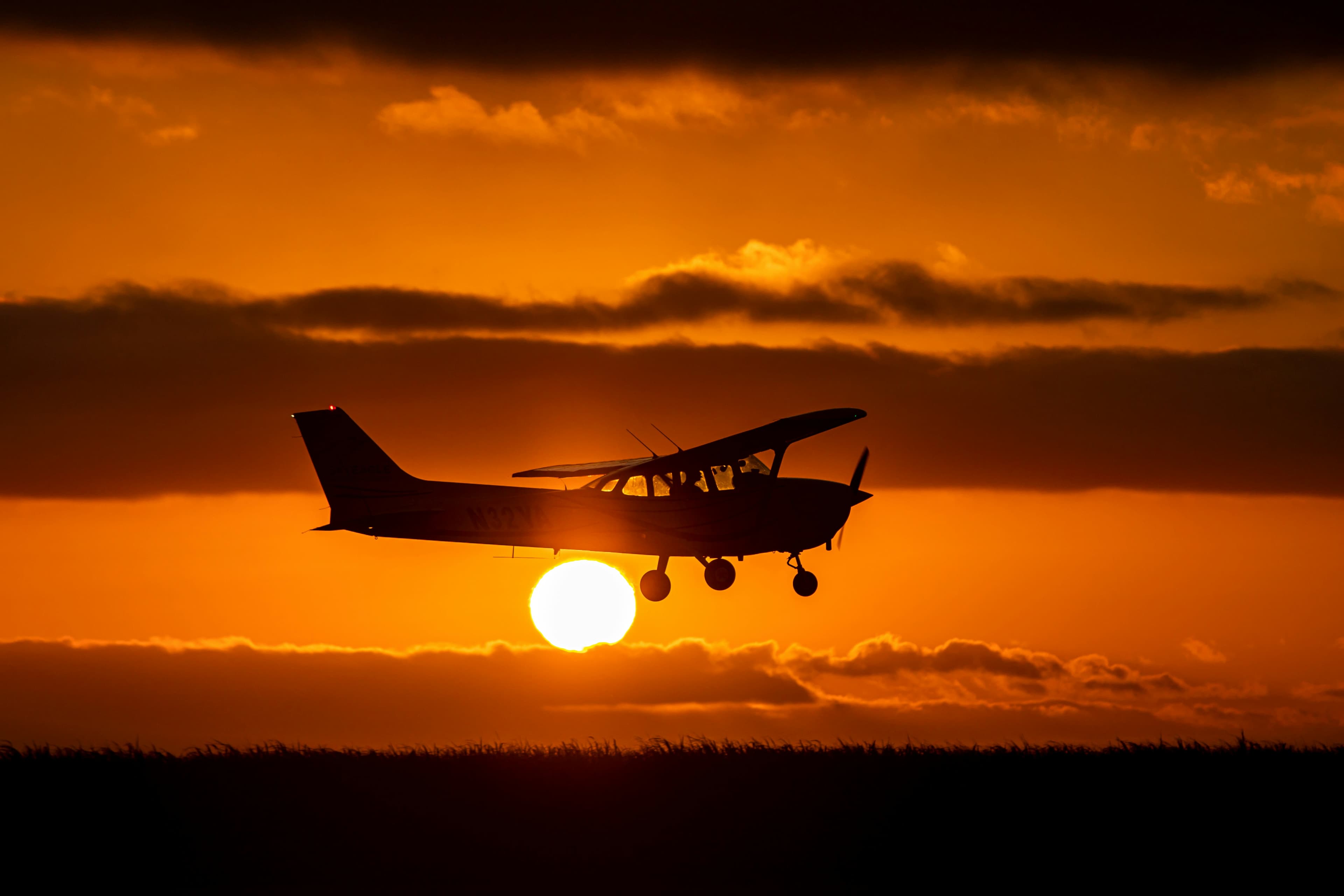
There are 170 hours in my logbook, most of them in a Cessna 172. At typical cruise fuel flow, that's about 1,800 US gallons of avgas and 15 tonnes of CO₂, a little more than three years of driving an average American car. I'm not going to stop flying, and I'm not going to pretend that number is zero.
Yes, you can love flying and keep a climate conscience, but flight shame alone won't get you there. Know your number, burn less, pay for rated carbon credits for the rest, push for cleaner aircraft, and claim nothing you can't prove. An offset doesn't cancel a flight. It pays for the same amount of CO₂ to be avoided or removed elsewhere.
TrimCarbon sells carbon offsets. I founded it, so read the offsetting parts with that in mind.
My number: 170 hours, about 15 tonnes of CO₂
I started training at Lachute Aviation, in Quebec, in the fall of 2023 and got my private pilot license in the spring of 2024, at about 60 hours. Since then I've added a night rating, a float rating and some aerobatics.
At typical cruise fuel flow (about 75% power), a 172 burns about 10.6 US gallons an hour and emits about 88 kg of CO₂. Counting all 170 hours at that rate, that's 14,960 kg. A well-leaned or training hour burns less; fuel receipts settle it. The car figure is the EPA's 4.6 tonnes a year.
For the sector, piston flying is small: jet fuel makes up more than 97% of US aviation CO₂. For one person, it isn't. Twenty-eight hours in a 172 uses a whole year of the 2.5-tonne lifestyle budget for 2030, which covers one person's household consumption (in CO₂e). I average about 5 tonnes a year from flying alone.
Yours takes two fields, hours and aircraft type: work out your own number.
Flight shame is a warning light, not a checklist
Flight shame (flygskam, a word of Swedish origin) is the guilt some people feel about flying because of its emissions. It gets attention, but it rarely changes a habit.
In a French survey of about 1,600 people published in June 2026, about 15% of travelers identified with flight shame. Declared guilt did not lower the chance of having flown in the past three years. Its publisher, the Forum Vies Mobiles, is a research center funded by the rail operator SNCF.
Psychologist Elke Weber explains why. Guilt is unpleasant, so people want out of it fast, which feeds the single-action bias, "where the fear-motivated flag for action goes down after the first protective or corrective action is taken". For a pilot, that action is one offset purchase.
The checklist: four habits that work better than flight shame
- Know your number. Log fuel uplifted against Hobbs time. Renters can multiply Hobbs hours by the type's average burn. Once a year, multiply the US gallons by 8.31 to get kg of CO₂ (litres by about 2.20).
- Burn less. One gallon an hour saved is 8.31 kg of CO₂, about 9% of a 172 hour, or about 1.4 tonnes over my 170 hours. Lean in cruise and throttle back when speed doesn't matter (more ways to cut fuel burn).
- Pay for what's left. Fund rated credits, retired on a public registry, sized to the hours you flew. One tonne covers about 11 hours in a 172. See what an hour costs to offset, and why, and the step-by-step plan.
- Push for cleaner aircraft. The long-term CO₂ fix is aircraft that burn less fossil fuel or none. Electric trainers already exist: in 2020, EASA certified the Pipistrel Velis Electro, a two-seat trainer. Back electric training where a school offers it. More on what unleaded, SAF and electric trainers change (checked September 2026).
Doesn't offsetting just give me permission to fly more?
Can I fly guilt-free if I offset? No, and the real risk is that the offset becomes a reason to fly more. That's moral licensing: allowing yourself more of a harmful habit after doing something good. Households that joined an electricity program promising to fully offset their emissions used 1 to 3% more energy afterwards. So the offset can become the single action. Six rules keep it honest:
- Decide the flight first. The offset never decides whether you go.
- Offset what you actually flew, from fuel or Hobbs time (not tach, which undercounts), rounded up.
- Size a plan to last year's hours, not next year's hopes.
- Watch your fuel per hour for the same kind of flying. It should hold or fall.
- Once a year, review hours, gallons and tonnes retired.
- Keep one habit that isn't money: leaning, the sim, a full seat.
Doubt that offsets work at all? Start with how to tell a credible credit from a weak one.
What I say when someone asks, and what I won't claim
Start by agreeing with what's true:
- "You're right, it burns fossil fuel. I've worked out my number and paid for credits to cover it."
- "Whether a trip beats the car depends on the aircraft, the route and how many seats are full." The math is in flying vs driving, seat by seat.
I won't call any flight "carbon neutral", "climate neutral", "net zero", "canceled out", "guilt-free" or "eco-friendly". EU rules that will apply from 27 September 2026 (Directive 2024/825, applied through each country's law) will ban businesses from claiming, based on offsetting, that a product has a neutral, reduced or positive impact in terms of greenhouse gas emissions. This page already follows them (what you can still say after offsetting).
The sentence I use, and you can borrow: "In [year] I flew [X] hours, emitted about [Y] tonnes of CO₂ and funded the retirement of [Y] tonnes of rated carbon credits. Here is the certificate. The credits don't cancel the flying." Mine covers all 170 hours, about 15 tonnes, and then some.
If you teach or run a club
When a student asks at the preflight brief whether this is bad for the planet, answer with the aircraft's number: "At cruise, this 172 burns about 10.6 gallons an hour, or 88 kg of CO₂. Leaning keeps it lower." Then show them in cruise.
One club 172 flying 400 hours a year emits about 35 tonnes. Our online plans stop at 15 tonnes a year, so a club gets a custom quote, or members offset their own hours (how TrimCarbon works for clubs).
Don't shame anyone. In the words of a University of Copenhagen researcher, "invoking shame often leads to resistance and defiance rather than positive behavioural change". Teach fuel management as airmanship: lean in cruise on every dual cross-country.
Questions pilots ask
Is it ethical to be a private pilot? The question usually pictures a private jet. In 2023, private jets and turboprops averaged about 2.4 tonnes of CO₂ per flight hour, roughly 27 times a 172 hour (our arithmetic on Gössling and colleagues; more in general aviation's carbon footprint). Ethics isn't arithmetic, but an honest answer starts with your own number.
What about the lead in avgas? Offsets do nothing for lead. One student pilot stopped lessons, partly over the lead in 100LL, and wrote on a personal page (updated 2006): "I couldn't really go flying anymore and not feel guilty about it". Every one of my hours was on 100LL. The FAA and industry aim to end leaded avgas in the US by the end of 2030 (checked September 2026). Until then, ask for unleaded and use it where your POH or an STC approves it. It fixes lead, not CO₂.
Why I built TrimCarbon
I started looking for a way to take responsibility for my share without giving up time in the air. TrimCarbon came out of that search (the longer story).
You pay per kilogram of CO₂ on a monthly or yearly plan, or buy one tonne for $40 with no subscription. In a 172, that's roughly $2.60 to $3.50 an hour, depending on plan and volume (plans and prices).
The credits come from CNaught's Impact portfolio, which CNaught calls its "recommended portfolio for maximizing your climate impact while minimizing your risk". CNaught says each project is highly rated by at least one of Sylvera, BeZero, Calyx Global or Renoster, and about 11% of the mix is carbon removals: here is how the projects are chosen. Every order comes with your TrimCarbon certificate, listing the projects behind it.
None of this makes my flying clean. It means I pay for what it emits, and I can show it. Put your hours into the calculator.
What does your flying emit?
Pick your aircraft and hours to see the CO₂ and what it costs to offset.
Calculate my hours